ADVERTISEMENT
Is It Safe to Eat?
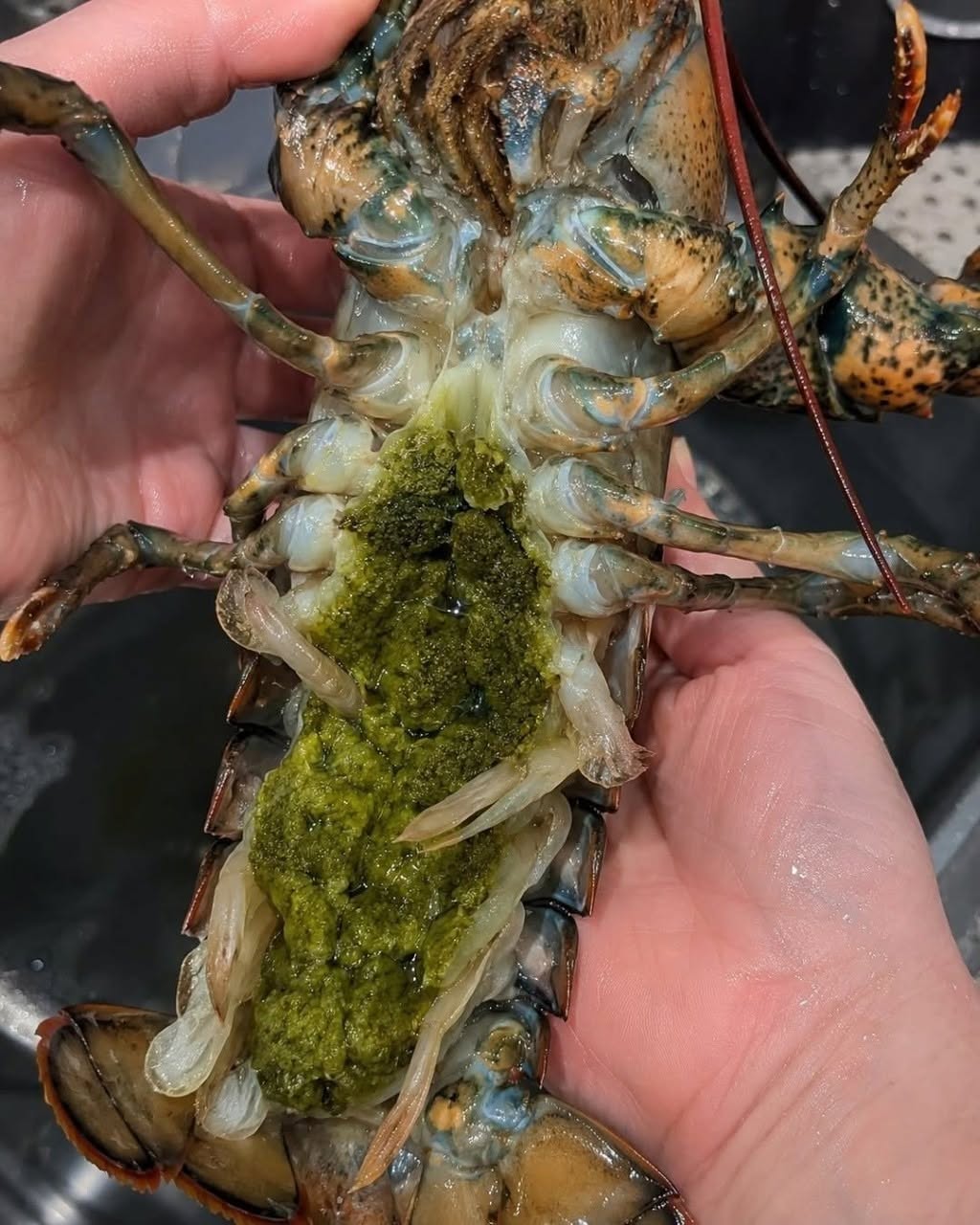
Tomalley is edible, but health authorities occasionally advise limiting or avoiding its consumption in certain regions.
For this reason, some public health agencies issue temporary advisories recommending that people avoid eating tomalley while continuing to enjoy the lobster’s tail and claw meat.
If you’re purchasing lobster from reputable seafood suppliers, it’s a good idea to stay informed about any local seafood consumption advisories that may apply to the waters where the lobster was harvested.
Does Every Lobster Have Tomalley?
- Diet
- Age
- Season
- Overall health
- Molting cycle
Some tomalley appears bright green, while others may have yellowish or olive tones.
ADVERTISEMENT
