ADVERTISEMENT
What About the Red Material?
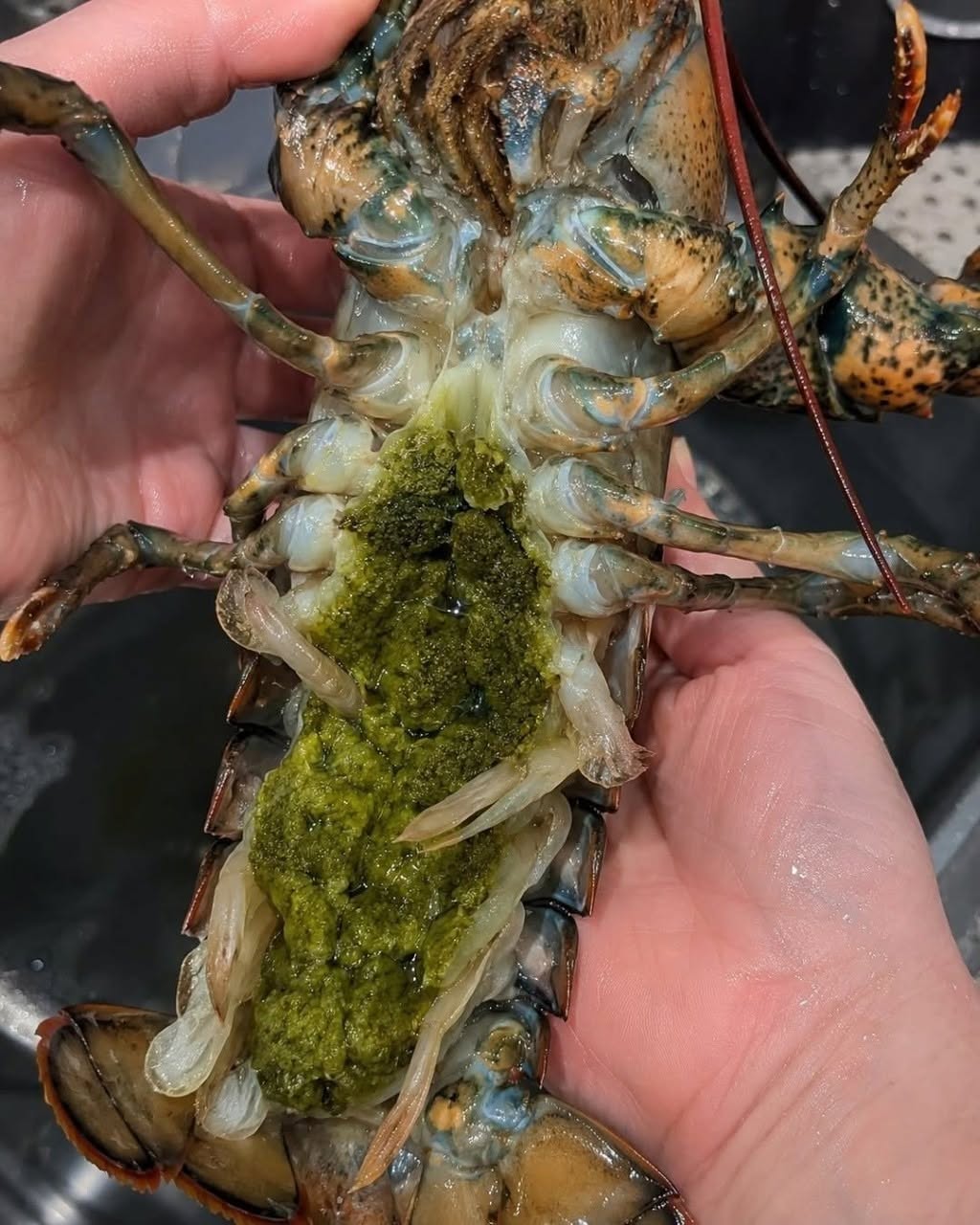
The bright red or deep coral-colored material is called roe or coral. Before cooking, it appears dark green or black. During cooking, heat transforms it into the vibrant red color many people recognize.
Unlike tomalley, roe consists of developing eggs and is also considered a delicacy in many culinary traditions.
Tips for Preparing Lobster
- Cook lobster thoroughly.
- Purchase seafood from trusted suppliers.
- Refrigerate fresh lobster promptly.
- Follow local seafood safety advisories.
- Remove the tomalley if you prefer to eat only the meat.
The tail, claws, and knuckle meat remain the most popular and widely enjoyed parts of the lobster.
A Culinary Tradition with a Scientific Story
The green “goodies” inside a lobster may seem mysterious at first, but they play an important biological role in the animal’s digestive system. For generations, seafood lovers have appreciated tomalley for its distinctive taste, while scientists continue to study environmental factors that influence seafood safety.
ADVERTISEMENT
