ADVERTISEMENT
Why It Feels Personal Anyway
Even though it’s not scientific, these posts feel surprisingly relatable. That’s because they tap into a few psychological triggers:
- Self-evaluation: People like to compare themselves to a result
- Curiosity gap: “What does my answer say about me?”
- Simplicity: Quick answers feel satisfying
- Social sharing: It’s easy to post and compare with friends
The Problem With Labeling Behavior as “Lazy”
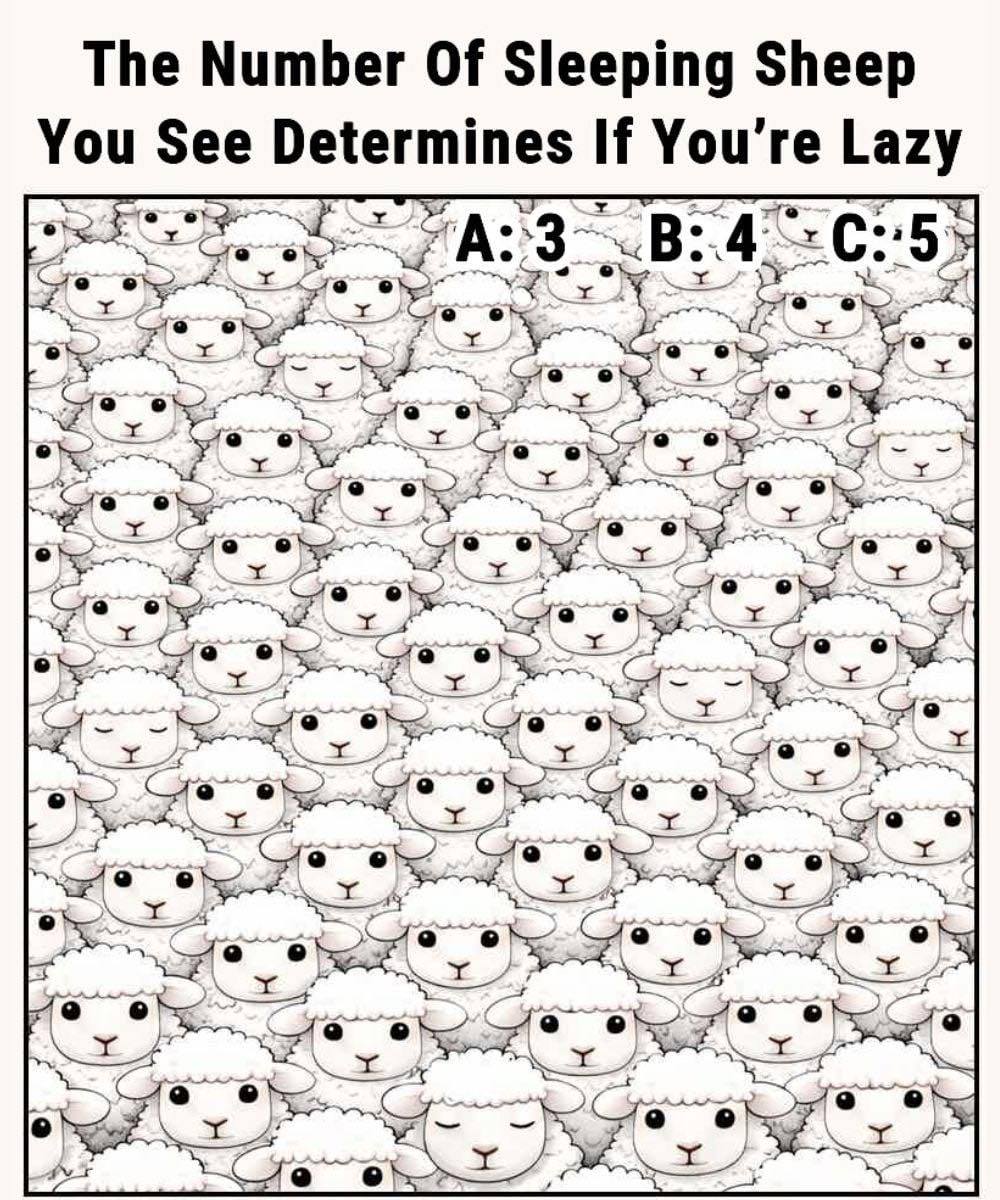
Laziness is a complex concept, not something that can be measured through an optical illusion. In psychology, what people call “laziness” is often influenced by:
- Energy levels and fatigue
- Motivation and interest
- Stress or mental health
- Environment and habits
Reducing all of that to a number of cartoon sheep oversimplifies human behavior in a misleading way.
What These Puzzles Are Actually Good For
- They test focus and attention
- They encourage pattern recognition
- They provide quick mental stimulation
- They’re fun, low-pressure brain breaks
So they’re better understood as entertainment—not assessment.
The Bottom Line
The “sleeping sheep” test is not a measure of laziness or personality. It’s a visual trick designed for engagement, not evaluation.
In the end, the only thing this test really reveals is how easily we turn simple visuals into complex meanings.
ADVERTISEMENT
