ADVERTISEMENT
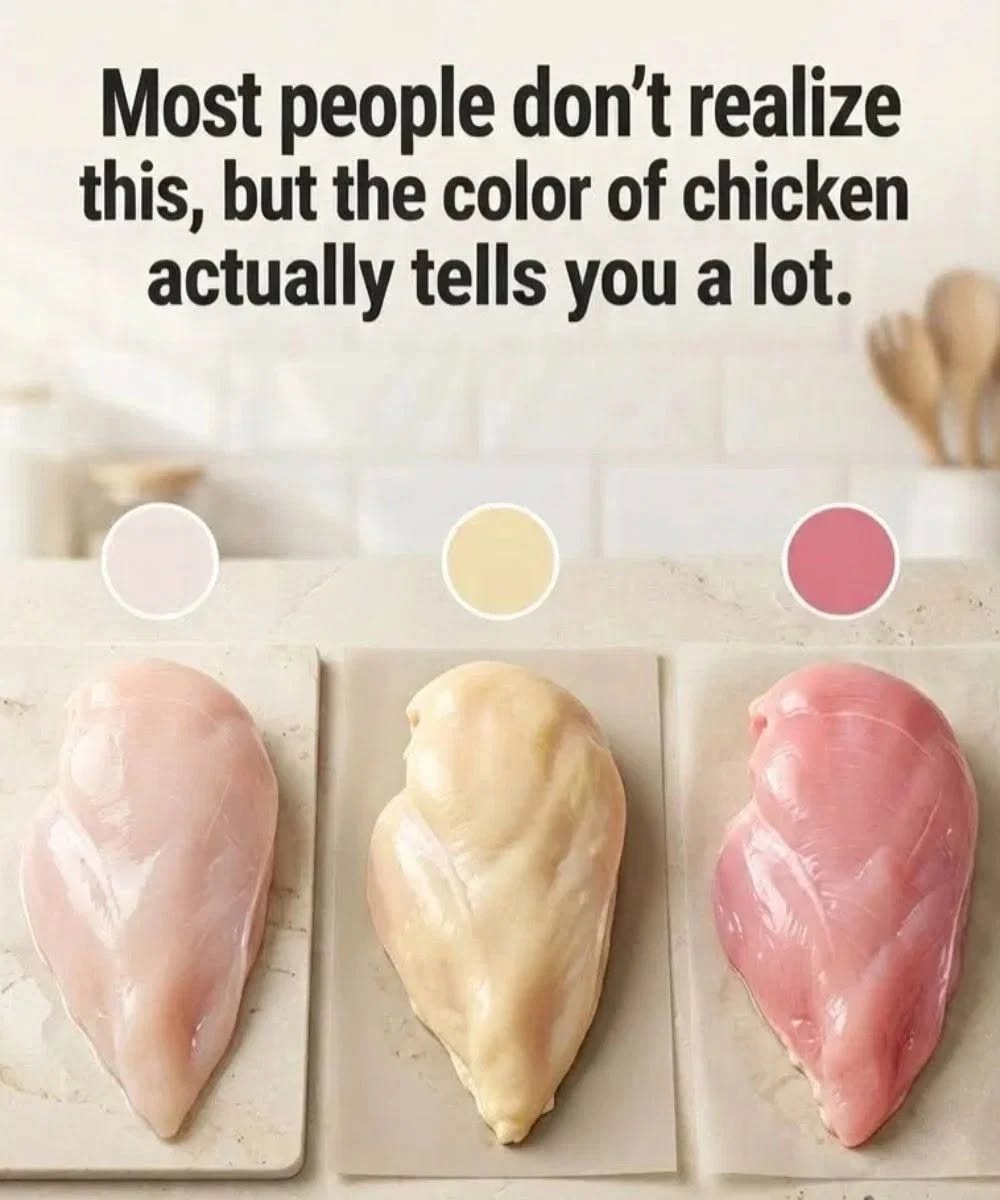
What About Yellow Chicken Skin?
Another source of confusion is yellow skin.
Feeds rich in corn, marigold petals, or other natural pigments can produce a yellow tint in the skin and fat.
This coloration is common in many regions and generally reflects feeding practices rather than quality differences.
When Color Can Signal a Problem
Consumers should be cautious if raw chicken displays:
- Gray or green discoloration
- Slimy texture
- Strong unpleasant odors
- Sticky surfaces
- Signs of damaged packaging
These warning signs are far more important than whether the meat appears light or dark.
Flavor Differences Between White and Dark Meat
One reason color attracts so much attention is that it often correlates with taste.
Neither option is inherently superior.
The best choice ultimately comes down to personal preference.
The Bottom Line
The color of chicken can reveal interesting details about the cut of meat and how the bird’s muscles were used, but it is not a dependable measure of quality.
Understanding the science behind chicken color can help shoppers make more informed decisions and avoid common misconceptions.
The next time you’re standing in front of the meat counter, remember: when it comes to chicken, color tells only part of the story.
ADVERTISEMENT
