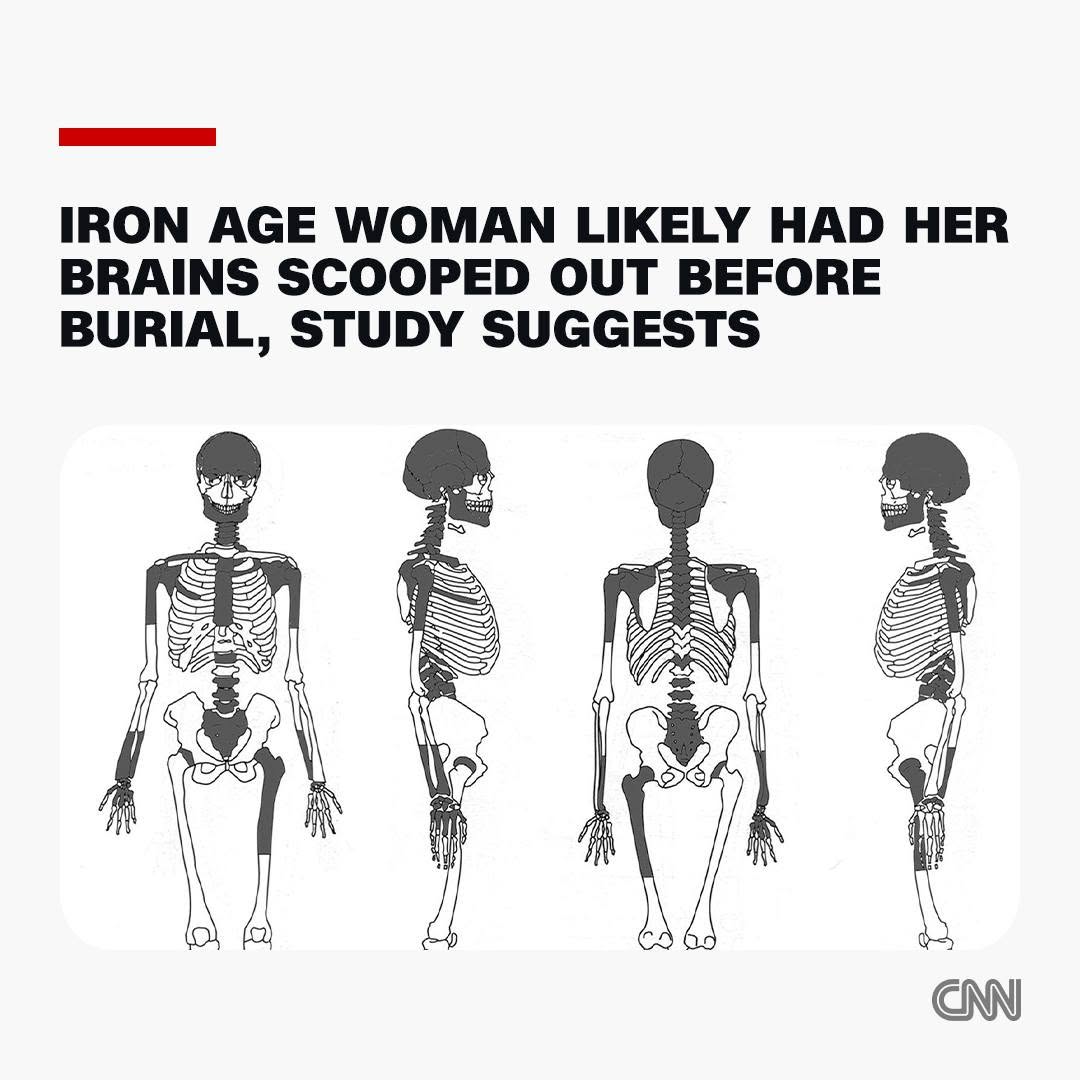
The remains, dated to roughly the Iron Age period (around 800 BCE to 100 CE depending on region), show signs consistent with deliberate cranial modification. Researchers report that the skull contains openings and structural damage that appear unlikely to be the result of natural decay or accidental trauma. Instead, the pattern suggests a controlled process that may have involved the extraction of brain tissue shortly after death.
While the exact cultural or ritual meaning remains uncertain, scientists say such practices could have been part of complex burial traditions involving body preparation, spiritual beliefs, or social status markers. In some ancient societies, manipulation of the body after death was not uncommon, and could include excarnation, defleshing, or selective preservation of remains.